

Full-Process Grille Lamp Line
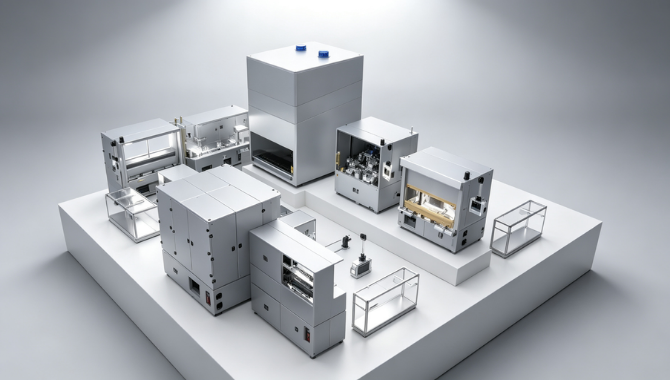
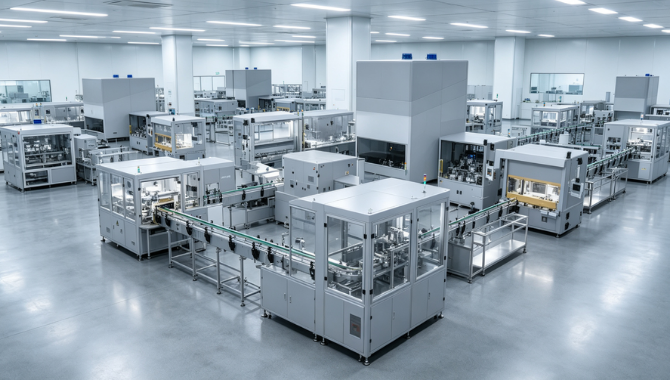
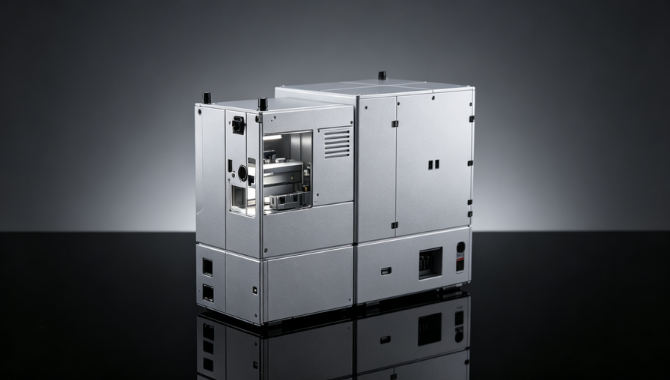
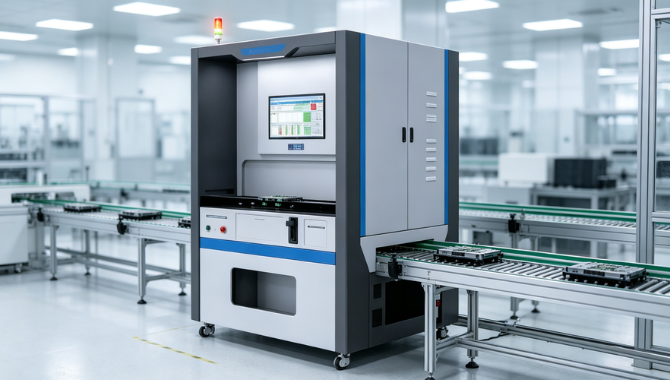
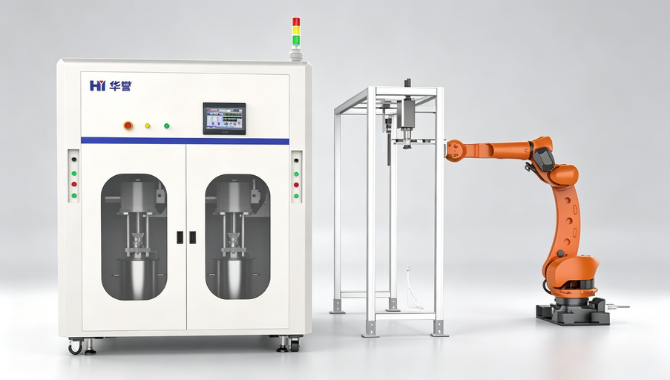
HY grille lamp production line covers complete processes including punching, bake forming, dispensing, pulse welding, assembly and full inspection. In-process CCD monitors assembly precision in real time, with integrated electrical and optical dual testing for automatic performance, light effect and defect verification. Equipped with self-developed MES and production dashboards for full traceability and production visibility. Purpose-built for automotive through luminous grilles.
Pulse Welding Reliability in Grille Lamp Assembly
Grille lamps often contain long LED strips with dozens of individual solder joints, and each one is a potential failure point. Poor solder connections can cause intermittent lighting or complete failure over time — especially under automotive temperature cycling and vibration. Pulse welding technology delivers controlled, repeatable heat input for each joint, producing consistent, reliable bonds without damaging heat-sensitive optical components. Integrated lines with built-in pulse welding also include post-weld inspection, so every joint is verified before moving downstream. This is far more reliable than manual soldering, where quality depends heavily on operator skill.
Opciones de personalización

Punching, baking, dispensing, welding and assembly stations can be added or removed per grille lamp process requirements. Flexibly matches process flows of varying complexity, avoiding redundant station investment for all types of grille lamp production.

Optical test items and thresholds are customizable, including brightness uniformity, chromaticity coordinates, light pattern distribution and dark spot defects. Thresholds set per OEM standards with flexible algorithms for different luminous grille products.

Electrical test stations support custom items and ranges including operating current, voltage, power consumption, circuit continuity and pulse lighting tests. Editable configurations adapt to different circuit designs with automatic data archiving.

CCD vision stations support custom defect recognition including scratches, bubbles, misalignment, glue overflow and poor welding. Algorithms are optimized for product appearance features with adjustable precision for strict cosmetic quality control.

MES data collection and production dashboards feature customizable data fields, report styles and display dimensions. Integrates with customer factory systems with configurable dashboard content for multi-level production management visualization.

Line layout and automation levels are customizable by workshop space, capacity targets and budget. Supports straight and U-shaped arrangements with phased automation upgrades for enterprises of different scales.
Unique Manufacturing Requirements for EV Grille Lamps
Electric vehicles have changed what grille lamps need to deliver. Without a traditional radiator grille behind them, EV front grilles are purely design and branding elements — which means appearance and lighting quality matter even more than on combustion-engine vehicles. EV grille lamps often use more complex light guide structures, more uniform surface lighting and tighter chromaticity specifications to match brand identity colors. They also frequently include dynamic lighting effects, which adds complexity to electrical testing. Production lines with flexible optical stations, dynamic electrical test capability and in-process CCD monitoring are best suited for EV programs.
How MES and Production Dashboards Boost Grille Line Efficiency
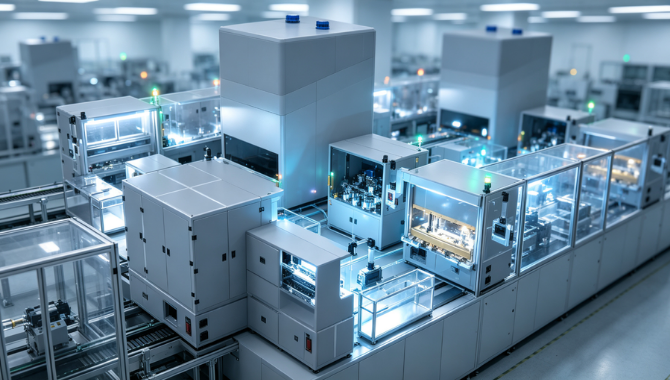
Modern grille lamp production lines generate huge amounts of data at every station, but many manufacturers still don’t use that data to actively manage production. They rely on shift-end reports and manual tallying to understand output, yield and downtime. MES integration with real-time production dashboards changes this completely. Every cycle count, test result, alarm event and downtime instance is captured automatically and displayed on live dashboards. This means bottlenecks become visible as soon as they appear, not hours later. Yield trends can be tracked by hour or by batch, so quality teams can intervene early if defect rates start to climb.
From Punching to Final Test: Full-Process Quality Control for Grille Lamps
Quality in grille lamp production isn’t built only at final inspection — it’s determined at every step along the way. A defect introduced at the punching stage may not become visible until after the lamp is fully assembled and lit, at which point fixing it is expensive and wasteful. Full-process quality control embeds checkpoints at each critical stage: dimensional verification after punching, form confirmation after baking, bond inspection after pulse welding and alignment checks during assembly. This approach catches problems when they’re cheapest to fix, before more value is added to the part. Paired with automatic data tracking at every station, manufacturers build a complete quality record for each unit.
Managing Optical Uniformity Across Long Grille Lamp Assemblies
One of the biggest challenges in grille lamp production is maintaining consistent brightness and color along the entire length of the lamp. A through-grille lamp can span the full width of the vehicle, and even a small brightness dip in one section breaks the premium look. Achieving this uniformity requires more than just good LED components — it requires controlled assembly and verified testing at every critical point. Integrated production lines build optical verification directly into final test. Every unit is tested for brightness distribution, chromaticity consistency and dark spot detection across its full length. Test data is stored per serial number, so manufacturers can prove consistency to OEMs and identify process drift early.
Product Features & Advantages
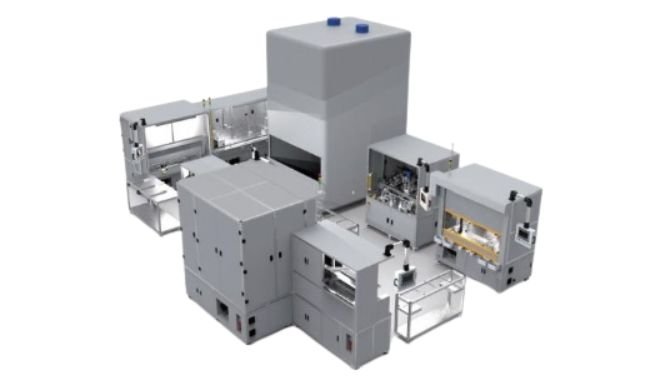
Full-Process Integration, One-Stop Production:One line covers all processes including part punching, bake forming, dispensing, pulse welding, assembly and final inspection — single-pass flow completes full manufacturing. No cross-equipment material handling reduces part damage and waiting time, greatly boosting production efficiency. Full process runs under a unified control system with consistent parameters, eliminating transition errors.
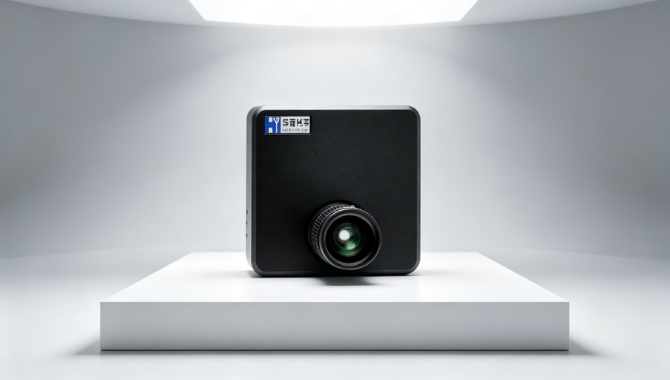
In-Process CCD Monitoring, Early Error Prevention:CCD vision and high-precision sensors at key forming, welding and assembly stations monitor dimensions, weld quality and alignment in real time. Immediate alerts or rejection on deviation prevent defective parts from moving downstream. Compared with final-inspection-only models, in-process inspection greatly reduces rework and scrap costs, controlling quality at the source.
Pulse Welding Technology, Reliable Durable Joints:Pulse welding technology completes LED strip and circuit connections with precise heat and time control, delivering consistent, high-strength joints without damaging delicate optics. Post-weld continuity and visual inspection double-verify quality. Compared with manual welding, pulse welding delivers far more consistent joints that better withstand automotive temperature cycling and vibration — reducing long-term failure risk, warranty costs and improving reliability reputation.
Modular Flexible Design for Multi-Variety Production:Modular architecture with independently configurable stations allows adjustment per process requirements. Paired with quick-change tooling and switchable test algorithms, different models change over quickly for shared-line production. It supports both high-volume efficiency and flexible multi-variety, low-volume custom orders. Modular design also enables phased automation upgrades to protect initial investment, flexibly expanding as models evolve and business grows.
Application Fields & Scenarios
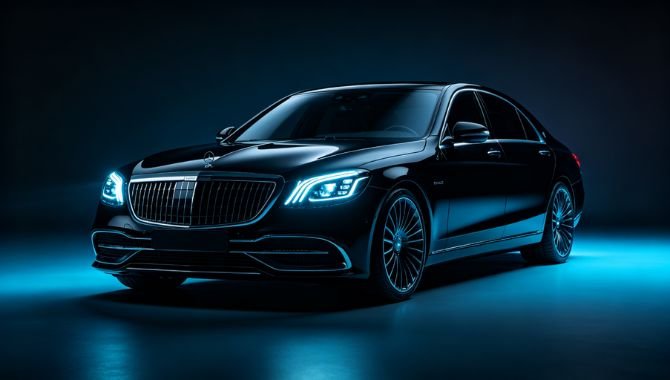
Passenger car through-front luminous grilles are large and long, demanding high assembly consistency and optical uniformity. HY lines cover full processes from strip punching and bake forming to whole-lamp assembly and full optical inspection, with CCD monitoring assembly precision for consistent light pattern and uniform brightness across long grille lamps.
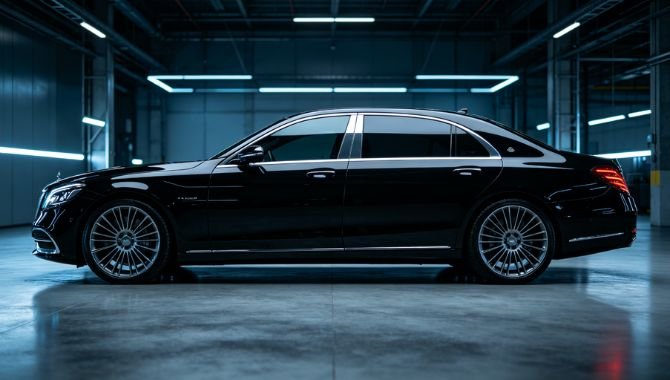
EV closed front grilles focus on luminous decoration, with appearance and optical effect directly affecting brand recognition. HY lines integrate high-precision CCD defect inspection for strict cosmetic control, while verifying uniformity and chromaticity consistency to meet premium, personalized grille lamp quality requirements for new energy vehicles.
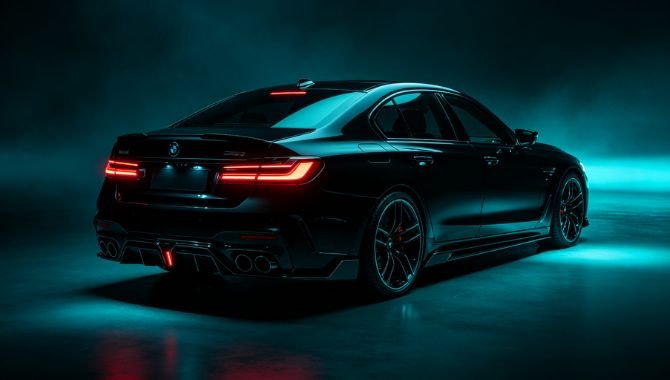
Rear through-grille taillights are iconic model design elements with strict regulatory and quality standards. After assembly, HY lines use optical testing to verify brightness, chromaticity and pattern compliance, plus CCD cosmetic inspection — meeting both safety regulations and brand design standards for every unit.

Productos relacionados
Alternative Names
grille lamp production line/automotive grille light/through grille lamp/front grille lamp manufacturing/ev grille lamp line/rear grille taillight/grille lamp assembly/pulse welding grille/grille lamp optical test/grille lamp ccd inspection/grille lamp defect detection/grille lamp punching/bake forming grille/grille lamp dispensing/grille lamp assembly line/luminous grille production/grille lamp EOL/grille lamp electrical test/grille lamp uniformity test/grille light chromaticity/grille lamp MES/production dashboard grille/grille lamp traceability/automotive grille lighting/grille lamp quality control/grille lamp manufacturer/grille light assembly line/china grille lamp line/HY grille line/through grille production/front face grille lamp/side skirt grille lamp/sill grille light/commercial vehicle grille/aftermarket grille lamp/custom grille lamp/grille lamp yield/grille lamp turnkey line/grille lamp factory/iatf grille production/inline ccd inspection/grille lamp reflow/pulse welding assembly/grille lamp brightness test/grille light pattern test/grille lamp dark spot/grille lamp upgrade/flexible grille line/multi-model grille production/grille lamp solution
 Español
  English
  Русский
  Français
  Português
  Tiếng Việt