


Every LED Calibrated. Every Board Matches
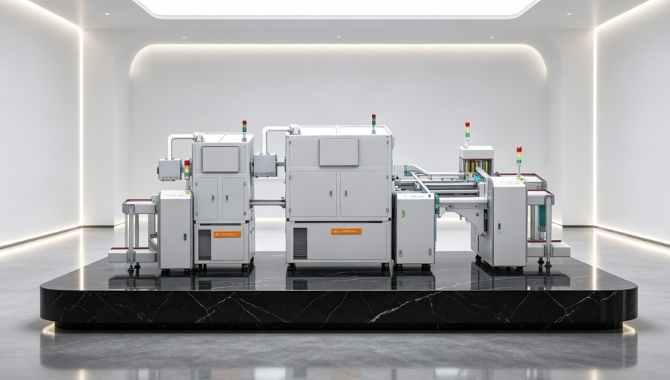
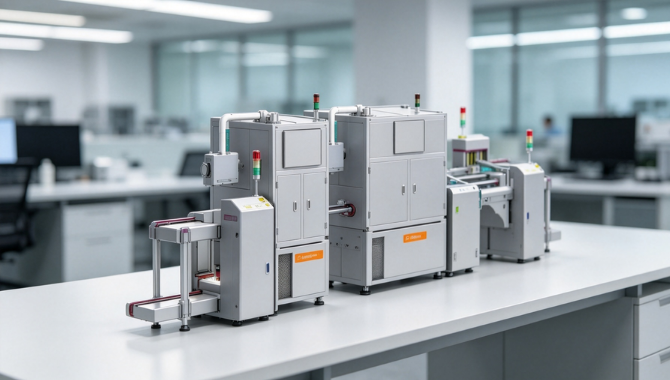
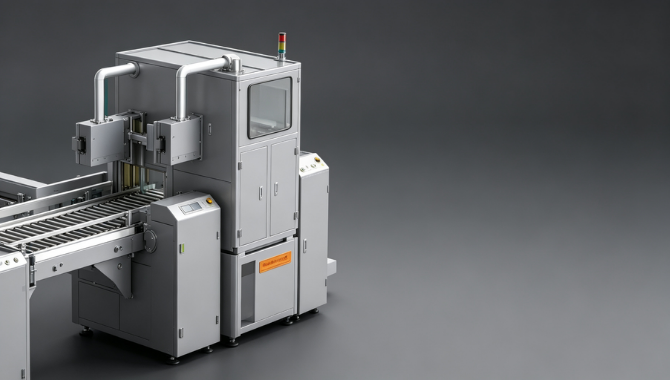
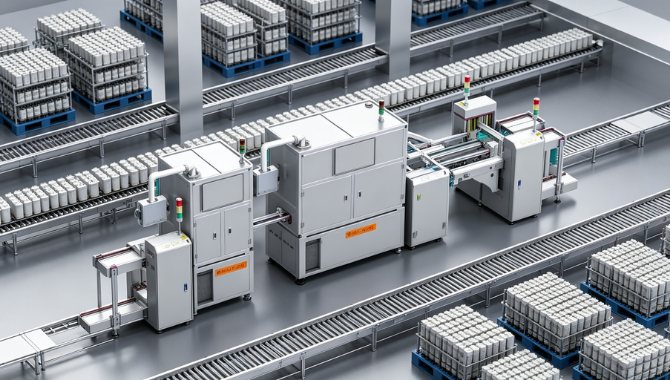
HY’s Ambient Light PCBA Programming & Calibration Line brings automotive-grade color precision to your SMT downstream. Each board enters the line, gets its RGB color coordinates and luminous flux measured to CIE 1976 standards, receives per-channel calibration values, and has those parameters written back to the driver IC via LIN or CAN — all in one continuous flow. Multi-channel parallel processing keeps takt high, automatic OK/NG sorting removes outliers, and every test record flows straight into your MES for full traceability. With color-coordinate accuracy of ±0.001 and repeatability down to ±0.0005, the line ensures that every ambient-light strip, instrument backlight and indicator module that ships from your plant matches the OEM’s color specification. No more batch-to-batch drift, no more field complaints about uneven lighting — just consistent, calibrated light, board after board.
Key Specifications
Parameter | Value |
|---|---|
RGB Color-Coordinate Accuracy (CIE 1976) | ±0.001 |
White LED Color Accuracy | ±0.001 |
Luminous Flux (Lumen) Accuracy | ±3% |
RGB Repeatability (CIE 1976) | ±0.0005 |
White LED Repeatability | ±0.0005 |
Luminous Flux Repeatability | ±1% |
Single-Color Test Time | 1 ms – 2 s |
Single-Channel Parameter Write-Back | Approx. 2 – 5 s |
Automotive Ambient Light PCBA Programming Calibration Line、RGB LED Color Testing、CAN/LIN Bus Flashing、CIE1976 Chromaticity Inspection、MES Data Upload、Car Interior Mood Lighting EOL Test Line
Lire la suite
Options de personnalisation
Configure single, dual or multi-channel stations to match your takt time. More channels run boards in parallel for higher throughput; fewer channels fit compact cells and lower-volume programs. HY scales the line around your volume, not the other way round.

LIN and CAN come standard, with additional protocols available on request — LIN 2.x, CAN FD, custom UART. The line writes calibration parameters directly back to the PCBA so every board ships programmed and calibrated, no offline step needed.

CIE 1976 color coordinates are standard; CIE 1931, CCT (correlated color temperature) and CRI can be added for specific programs. Lumen range and integration time are tuned to your LED type and brightness class.
Choose how out-of-spec boards are handled — automatic divert to a reject bin, ink or laser marking for visual identification, or data-only flagging for downstream rework stations. Match the flow to your rework strategy.

In-line conveyor, tray-to-tray cell or magazine loader — pick the input/output format that fits your upstream SMT line and downstream assembly. HY integrates the calibration station into your existing material flow.

Standard data export covers test results, serial numbers and pass/fail logs. Full MES integration — SPC dashboards, traceability by serial, parameter history and recipe management — can be scoped to your factory system.
Product Overview
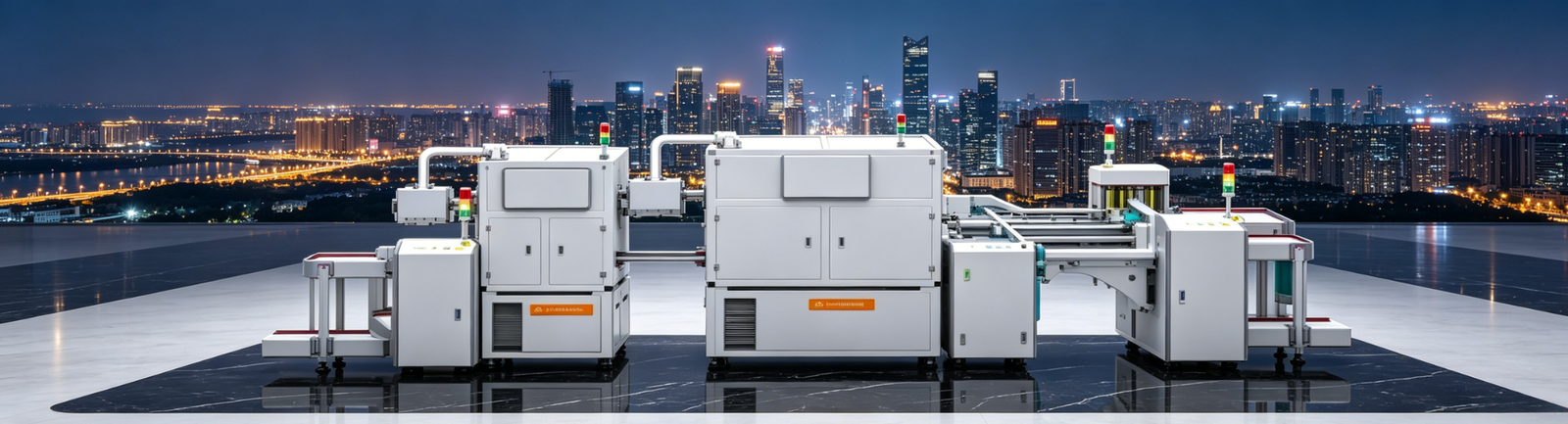
The HY Ambient Light PCBA Programming & Calibration Line is an automated in-line system purpose-built for automotive RGB ambient-light PCB assemblies. As each PCBA moves through the line, the system fires the LEDs, captures RGB color coordinates (Cx, Cy) and luminous flux (Lumen) against the CIE 1976 standard, calibrates each channel, and writes the correction parameters back to the board via LIN or CAN communication. Multi-channel parallel processing keeps takt high, automatic OK/NG sorting removes bad units, and all test data flows directly into the factory MES for traceability and SPC analysis. Designed for high-volume automotive ambient-light production, the line delivers ±0.001 color-coordinate accuracy, ±3% flux accuracy and repeatability down to ±0.0005 — so every LED strip that leaves the line matches the OEM’s color specification, board to board, shift to shift.
The Hidden Cost of Skipping End-of-Line Color Testing
It’s tempting to trust the LED supplier’s bin label and skip in-house testing. Until the customer complaints start rolling in. Color drift that’s invisible on a single LED becomes impossible to ignore when a dozen strips sit side by side in a dashboard. Rework at the OEM level is expensive — pulling trim, replacing modules, paying premium freight for rush parts. HY’s in-line calibration catches variation before the board leaves your plant, with CIE 1976 accuracy down to ±0.001 and repeatability of ±0.0005. Every board ships calibrated, every board has a data record, and the risk of a field complaint drops dramatically. The line pays for itself not just in labor saved, but in warranty costs you never have to pay.
Multi-Channel Calibration: The Math Behind Faster Takt
A single-channel tester is simple to build but becomes a bottleneck the moment volume ramps up. Each board needs measurement time plus parameter write-back — usually a few seconds per channel. Run them one at a time and your takt is set by that sum. Multi-channel calibration runs several boards in parallel, so the line processes N boards in roughly the time a single-channel machine does one. HY’s multi-channel architecture keeps the optical path consistent across every station, so accuracy doesn’t drop when throughput rises. For Tier-1 suppliers scaling from pilot to full production, the math is straightforward: more channels means more boards per hour, fewer shifts to hit the volume target, and a faster payback on the whole line.
What MES Integration Actually Does for Your Light Line
Logging test data to a CSV file on a local PC is better than nothing — but it’s a long way from real manufacturing intelligence. MES integration ties every calibration result to a serial number, feeds SPC charts in real time and flags drift before it becomes a scrap event. HY’s line pushes every board’s color coordinates, flux values and pass-fail status straight to your MES, with timestamps and station IDs. When a quality engineer wants to know why Tuesday’s 3 p.m. shift drifted slightly green, the data is already there — no hunting through spreadsheets, no manual cross-referencing. For automotive programs with PPAP and audit requirements, that level of traceability isn’t optional. It’s table stakes.
Product Features & Advantages
- CIE 1976 High-Precision Color Measurement: HY’s line uses the CIE 1976 (u’v’) color space as standard, where equal numerical distances correspond more closely to perceived color difference — so your test data matches what the driver experiences. Color-coordinate accuracy reaches ±0.001 with repeatability down to ±0.0005, and luminous flux accuracy sits at ±3% (±1% repeat). That level of precision isn’t marketing copy — it’s what lets you hit tight OEM color bins, batch after batch, without sorting and rework.
- Closed-Loop LIN / CAN Parameter Write-Back:Measurement alone isn’t calibration. HY’s line computes per-channel correction for every R, G and B LED, writes the trim parameters back to the driver IC via LIN or CAN communication, then re-measures to confirm the calibrated output lands in spec. Boards exit the line programmed and verified — not just sorted. The closed loop is what turns a tester into a true calibration system, and it’s why the boards you ship perform consistently once installed in the vehicle.
- Automatic OK/NG Sorting with Traceable Logs:The line automatically judges each board against your color and flux limits, diverts NG units and optionally marks them for easy identification. Every result — pass or fail, exact coordinates, flux value, timestamp, station ID — is logged by serial number and pushed to MES. When a quality question comes up months later, you don’t guess. You pull the record. That’s traceability built into the process, not added on as an afterthought.
- Recipe-Driven Flexibility Across Programs:Different PCBA models, different LED types, different OEM specs — all handled by loading a new recipe. Color targets, flux limits, communication parameters and test timing switch in software, not with wrench time. LIN or CAN, RGB or white-light, ambient strips or instrument backlights — the same line adapts. That flexibility protects your investment as product mixes change and new programs come online.
Application Fields & Scenarios
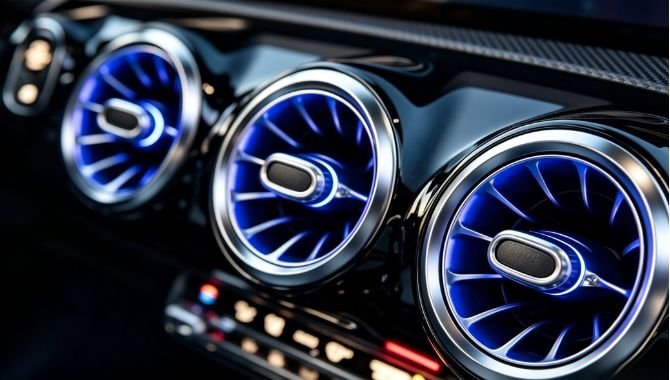
Dashboard, door-panel and center-console ambient-light strips demand tight color consistency across every position in the cabin. HY’s line calibrates each PCBA individually, writes correction coefficients via LIN/CAN and ensures Cx, Cy coordinates stay within OEM color bins. Every strip matches the next, even across different LED batches and suppliers — so the interior looks like one continuous light, not a string of mismatched segments.
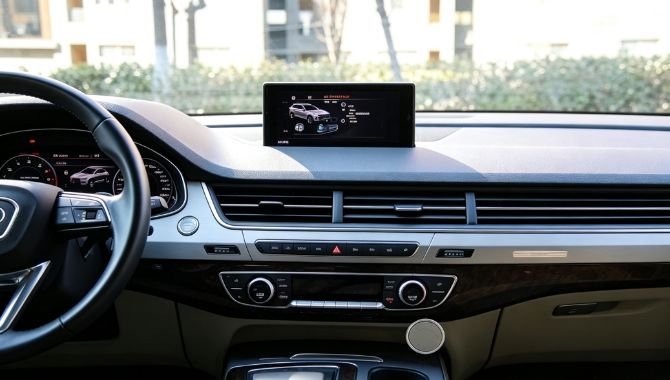
Instrument clusters, switch backlights and indicator LEDs all need uniform white-point and brightness to read cleanly day and night. The line measures white LED color accuracy to ±0.001, calibrates flux within ±3% and writes trim values back to the driver IC. The result: a dashboard where every gauge, tell-tale and button backlight matches — no washed-out switches, no dimmer sections, no customer complaints about uneven lighting.
EV charge ports, battery indicators and ambient status rings use RGB LEDs to communicate state — red for charging, green for full, blue for standby. Color accuracy matters because drivers rely on those cues. HY’s line calibrates each channel independently, verifies RGB coordinates and confirms the final mixed color matches specification. Every indicator reads the same, every time, across every vehicle off the line.
Smart light strips, under-cabinet RGB and architectural decorative LEDs depend on uniform color across long runs. Multi-channel calibration from HY evens out LED bin variations so a 5-meter strip looks like one continuous color, not a gradient. The line can be configured for CCT, RGBW or single-color boards and integrates into high-volume consumer-lighting production flows.
Pourquoi nous choisir ?
CIE 1976 color-coordinate accuracy of ±0.001 and repeatability down to ±0.0005 — built for the tight color bins automotive OEMs demand. Every board that leaves the line matches the spec, not just the average batch.
HY doesn’t just test and sort. The line measures, calculates correction values, writes them back to the driver IC via LIN or CAN, and re-verifies. Boards ship calibrated, not just inspected.
LIN or CAN, RGB or white, single-color or multi-zone — the line adapts to your boards, not the other way around. Recipe-based changeover means new programs go live fast.
Produits apparentés
Alternative Names
ambient light PCBA programming line / LED PCBA calibration system / automotive RGB calibration line / CIE 1976 color coordinate testing / LED luminous flux measurement / LIN bus LED calibration / CAN bus LED programming / PCBA end-of-line calibration / multi-channel LED tester / RGB color calibration machine / automotive interior lighting test / LED driver IC programming / in-line LED color calibration / PCBA burn-in calibration line / automotive ambient light tester / LED binning calibration / color consistency testing / LED parameter write-back system / MES integrated LED testing / SPC color measurement / automotive PCBA test line / LED CCT calibration system / RGBW PCBA testing / optical calibration chamber / LED flux accuracy tester / ambient light module calibration / automotive lighting production line / LED repeatability testing / LED color drift compensation / PCBA functional test LED / in-circuit LED programming / automotive LIN LED driver / CAN FD LED calibration / LED serial number traceability / LED NG marking system / tray to tray LED calibration / conveyor LED testing line / automotive light source calibration / LED driver trim value write / automotive optical test equipment / Kunshan LED calibration line / HY ambient light tester / premium interior lighting calibration / EV indicator LED calibration / medical LED module testing / display backlight calibration / smart home LED test line / automotive Tier 1 LED calibration / LED mass production calibration / optical PCBA test system
Envoyez votre demande maintenant
 Français
  English
  Русский
  Español
  Português
  Tiếng Việt