


Full Auto Actuator Line
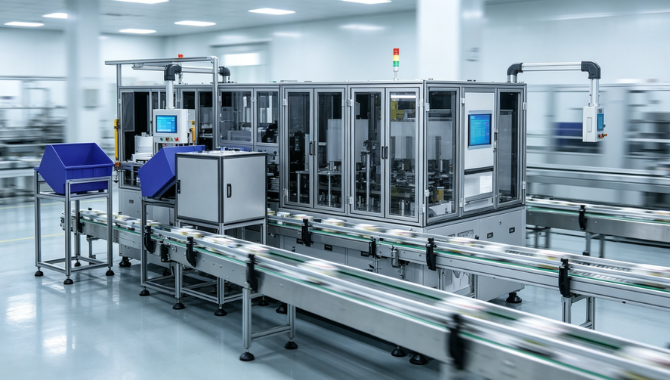
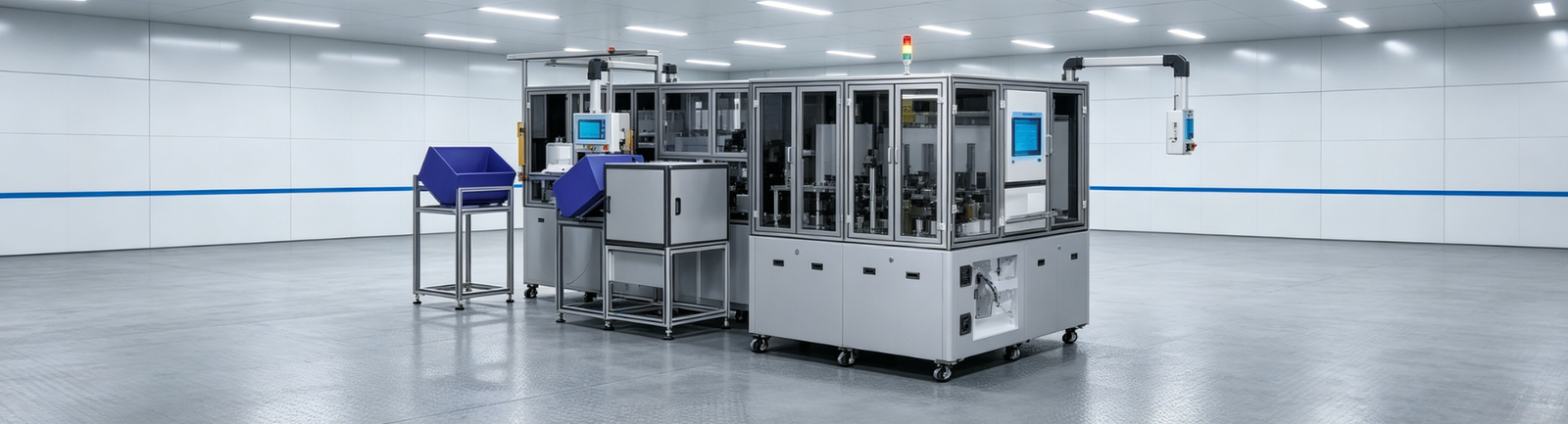
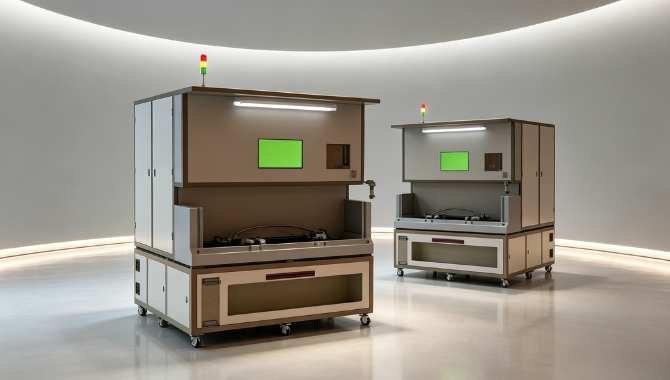
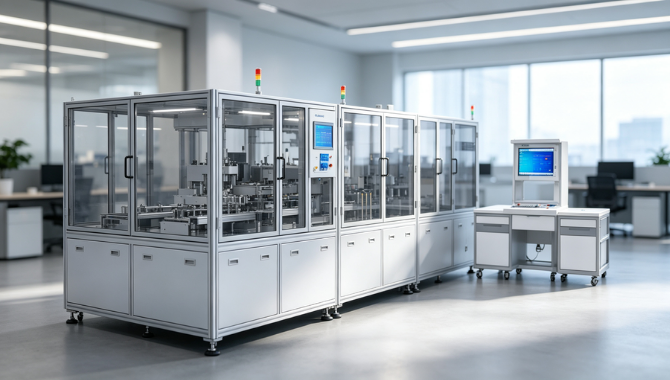
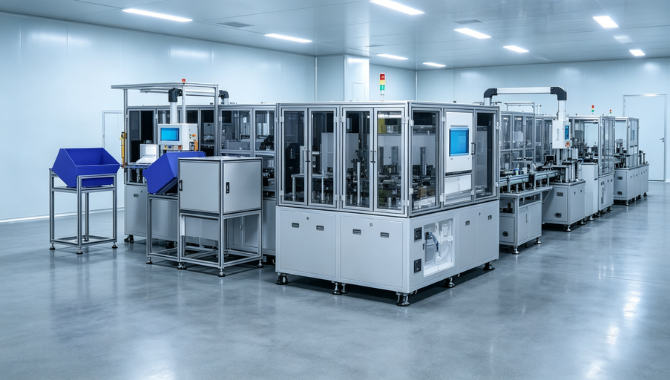
HY automated actuator production line integrates full-flow assembly, testing, marking and unloading. Motor pressing, gear assembly, CCD missing-part detection, performance and noise final testing — all in one line. Modular design supports quick multi-model changeover with stable cycle time and consistent quality for intelligent manufacturing upgrade.From part loading to finished product unloading, HY actuator lines automate every process step. Robotic transfer, CCD error-proofing and comprehensive EOL testing covering performance, noise and rattle. Every unit automatically traceable with stable quality and doubled efficiency — core equipment for high-volume actuator manufacturing.
How Automated Actuator Assembly Lines Transform Production Efficiency and Quality
Automated actuator assembly lines are fundamentally changing how manufacturers build these small but critical components. Traditional manual or semi-automatic assembly relies heavily on worker skill and consistency, leading to variations in torque, missing parts and inconsistent test results from shift to shift. Fully automated lines eliminate these variables by performing every operation — from worm pressing and gear greasing to housing assembly and final testing — with repeatable precision every single cycle. The result is dramatically higher throughput at lower per-unit labor cost, plus near-zero defect rates when paired with inline CCD inspection.
For actuator suppliers serving automotive and industrial markets where quality failures carry serious consequences, automation is no longer optional. Companies that invest in modern actuator assembly lines see faster ROI than many expect, typically within two to three years through labor savings, reduced rework and fewer warranty claims — all while scaling capacity to match growing customer demand.
Lire la suite
Options de personnalisation

Product Compatibility & Quick-Change Tooling
HY actuator lines support multi-model production on a single line, with custom quick-change tooling and fixtures tailored to your product portfolio. Switching between actuator models only requires swapping corresponding tooling and loading the right program — no full line reconfiguration needed. High compatibility means platform variants share most stations, maximizing equipment utilization across multiple products and adapting to high-mix, low-volume market demands.

Assembly Process Module Configuration
The line uses modular station design, letting customers add or remove process modules based on their product assembly requirements. Optional stations include motor worm pressing, metal shaft insertion, gear greasing & assembly, seal ring installation, ultrasonic housing welding and screw driving. Each station operates independently with individual control, so customers flexibly combine stations by product complexity. New stations can be added later as products evolve, protecting investment and extending line lifecycle.

Testing Items & Standard Customization
End-of-line test stations are customizable for test items and pass/fail thresholds per customer quality standards, covering performance testing, noise detection, abnormal sound detection, current measurement, torque testing and stroke testing. CCD vision inspection supports custom detection points and missing-part checks for critical components. All test criteria are configurable per enterprise or industry standards like IATF 16949, with automatic data logging and archiving for full quality traceability.
Loading/Unloading & Automation Integration
Loading and unloading methods are customizable based on line layout and automation level, supporting manual refill with auto-feeding, vibratory bowl feeders, magazine loaders and AGV integration. Optional robotic pick-and-place with barcode scanning enables fully automatic product transfer between stations. Integration with existing MES and ERP systems is available, as well as linkage with upstream and downstream equipment to fit into your overall smart factory layout.
The Critical Role of Inline Testing in Automated Actuator Production Lines
When evaluating actuator assembly lines, many manufacturers focus on assembly speed but underestimate the importance of integrated end-of-line testing. The best automated lines do more than just put parts together — they verify that every finished unit meets performance, noise and durability specifications before it leaves the station. Modern actuator production lines include three key test categories: performance testing that measures torque, current draw and travel distance to confirm functional behavior; noise and abnormal sound detection that identifies rattles, buzzes and other acoustic defects the end user would notice; and visual inspection using CCD cameras to catch missing components, misaligned parts and assembly errors before final housing closure. Each test station logs data automatically, creating a complete traceability record for every serial number. This level of quality assurance is essential for automotive suppliers subject to IATF 16949 requirements, where zero defects and full traceability are expected. Investing in a line with robust integrated testing prevents costly field failures and protects brand reputation far more effectively than downstream sampling inspection ever could.
Key Factors to Consider When Selecting an Actuator Assembly Line Supplier
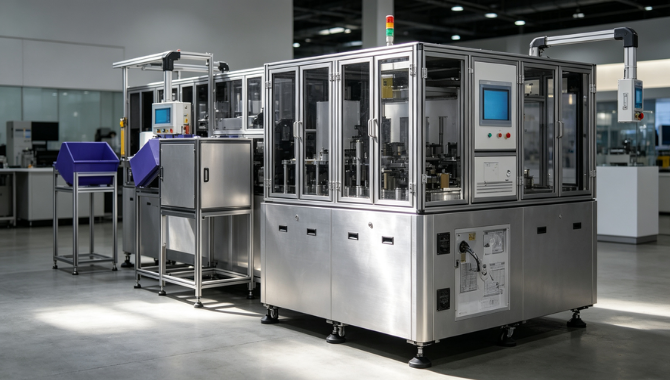
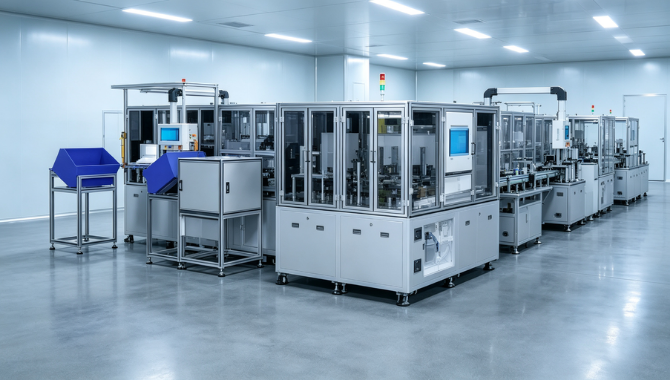
Choosing the right supplier for your actuator assembly line is one of the most impactful decisions a manufacturing engineering team can make. Start by evaluating the supplier’s domain experience — look for providers who have actually built actuator lines before, not just general automation integrators. Actuator assembly involves unique challenges like precise gear meshing, controlled greasing volumes and delicate micro-part handling that generalists often miss. Second, assess modularity and changeover capability. Most actuator manufacturers produce multiple models, and a line that requires weeks of rework for each new product kills ROI. Third, verify the testing capabilities and data architecture — can the line integrate with your MES? Does it support custom test parameters and pass/fail criteria? Fourth, consider after-sales support and spare parts availability. A production line is a ten-year investment, and downtime costs far more than the equipment itself. Finally, visit reference sites and talk to existing customers about real uptime rates, changeover times and long-term reliability. The cheapest line upfront is rarely the most economical over its full lifecycle.
Understanding End-of-Line Testing for Automotive Actuators
End-of-line (EOL) testing is the final quality gate on any actuator assembly line, and its design directly determines how many defective units reach customers. For automotive actuators in particular, EOL stations need to validate three critical dimensions. First, functional performance: does the actuator deliver the specified torque across its full travel range, draw the correct amount of current and stop at the right position limits? Second, acoustic quality: noise testing measures overall sound pressure level, while more advanced abnormal sound detection identifies specific defect signatures like gear rattle, motor buzz and loose part rattles that basic decibel meters would miss. Third, dimensional and completeness verification through vision systems confirms all components are present and properly seated before the housing is permanently closed. The best EOL systems combine all three checks in a single station and automatically serialize each test record tied to the unit’s unique barcode. This data feeds directly into quality management systems for SPC analysis and traceability. For automotive suppliers, thorough EOL testing isn’t just a quality step — it’s a risk management investment that prevents expensive recalls and protects OEM relationships.
Flexible Actuator Production Lines: Adapting to Multi-Model Manufacturing
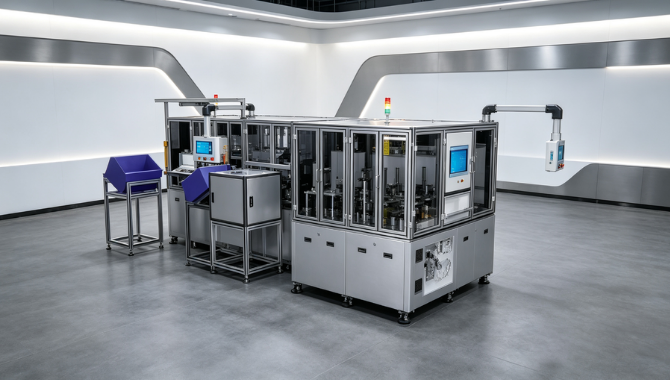
Gone are the days when actuator manufacturers could dedicate an entire production line to a single product model. Today’s market demands shorter product lifecycles, more variants per platform and smaller batch sizes, making flexible production lines essential. A truly flexible actuator line uses quick-change tooling at every station — fixtures, nests and grippers that swap in minutes rather than hours or days. Control programs store recipes for each product model, so changing production only requires selecting the right recipe on the HMI. Modular station design means new process steps can be added without rebuilding the whole line, and stations can be rearranged as product flow changes. This flexibility directly translates to business value: manufacturers can take on more product programs, respond faster to customer changes and amortize equipment investment across a broader product mix. The key is designing for flexibility from day one rather than trying to retrofit it later. Companies that build flexibility into their initial line specification enjoy lower total cost of ownership and much faster ramp-up for new products — a decisive advantage in competitive automotive and industrial component markets.
Application Fields & Scenarios


HVAC damper actuators are core components regulating airflow mode and temperature in automotive climate systems, produced in high volume with strict quality requirements. HY actuator lines handle fully automated production from motor worm pressing, gear assembly and housing snap-fit through final testing. CCD vision ensures no missing small parts like gears and springs, while end-of-line stations verify torque, stroke, noise and other critical parameters. Every unit is automatically marked with traceability records. Stable cycle time suits mass production, helping automotive component suppliers deliver high-quality actuators compliant with IATF 16949 standards.
Automotive seat adjustment actuators handle fore-aft, height and recline electric adjustment with strict reliability and quietness requirements. HY actuator lines feature custom assembly processes tailored to seat actuator structures, including motor component pressing, metal shaft assembly, gear greasing and ultrasonic housing welding. Noise and rattle test stations specifically verify operational smoothness for silent in-vehicle performance. The line accommodates multiple seat actuator models with quick-change tooling for fast changeover, meeting multi-platform, multi-model production needs of automotive seat suppliers.
Product Features & Advantages
Full-process automation from loading, assembly and testing through marking and unloading, with robotic pick-and-place transfer minimizing manual intervention. Stable cycle time with continuous operation dramatically increases output per shift, directly reducing per-unit labor cost and significantly boosting production efficiency and capacity.
Integrates motor worm pressing, gear greasing & assembly, CCD vision inspection, housing press-fitting, laser marking, performance testing and noise & rattle detection. All stations work in sequence with single-pass flow through assembly and testing — no intermediate handling required, saving space and material handling cost.
CCD vision inspection stations check for missing, wrong and misaligned critical parts before housing closure. Compared to manual visual inspection, vision systems operate reliably 24/7 with high detection accuracy, preventing missed-part defects from escaping. Inspection images are automatically archived for visual quality traceability.
Modular station design with each station independently controllable. Quick-change tooling supports multi-model production on the same line with fast, simple changeover. New stations can be added as products evolve and line layout can be reconfigured — strong flexibility and scalability protect long-term investment value.
Produits apparentés
Alternative Names
actuator assembly line/automated actuator production line/actuator manufacturing equipment/automatic actuator assembly machine/automotive actuator production line/HVAC actuator assembly line/seat actuator assembly line/headlight actuator production line/valve actuator assembly equipment/actuator EOL testing/inline actuator testing/CCD visual inspection assembly/actuator noise testing/abnormal sound detection system/laser marking actuator line/robotic pick and place actuator/gear greasing assembly/motor worm pressing station/housing press fit machine/automated assembly line manufacturer/custom actuator production line/flexible actuator assembly/IATF 16949 actuator line/actuator torque testing/actuator stroke measurement/actuator current testing/missing part detection vision/smart factory actuator production/MES integrated assembly line/actuator production automation/industrial actuator assembly/appliance actuator manufacturing/grille shutter actuator line/tailgate actuator assembly/charge port actuator line/actuator assembly solution/automation equipment supplier china/HY actuator production line/turnkey actuator line/modular assembly station/quick change tooling assembly/actuator quality control line/fully automated actuator line/semi automatic actuator assembly/actuator assembly cycle time/actuator production efficiency/automated assembly ROI/actuator traceability system/actuator ultrasonic welding/actuator screw driving station
Envoyez votre demande maintenant
 Français
  English
  Русский
  Español
  Português
  Tiếng Việt