


Corporate Features of EZAN
EZAN stands as a leading Chinese human‑robot integration robotics enterprise, focusing on intelligent mobility solutions for people with lower‑limb movement disorders and degenerative motor capacity. We jointly built a joint laboratory with SIAT, Chinese Academy of Sciences, to explore cutting‑edge human‑robot co‑fusion technology and push industrialization of smart rehabilitation assistive devices. Our core team gathers national‑top scientists, including recipients of National Science Fund for Distinguished Young Scholars and national high‑level talent experts. More than 30 doctors and postgraduates form our R&D backbone. Different from traditional robot manufacturers, EZAN adopts a dual‑strategy of “rigid‑flexible integration”, covering medical rehabilitation, elderly‑care health and consumer electronics. We break overseas technical barriers of flexible exoskeleton, delivering wearable robotic products that fit real‑world user demands rather than purely lab‑oriented prototypes. Multiple mainstream media and government leaders have recognized our technical achievements, and our solutions serve domestic 31 provinces and 21 overseas countries.
EZAN Manufacturing & Factory Strength
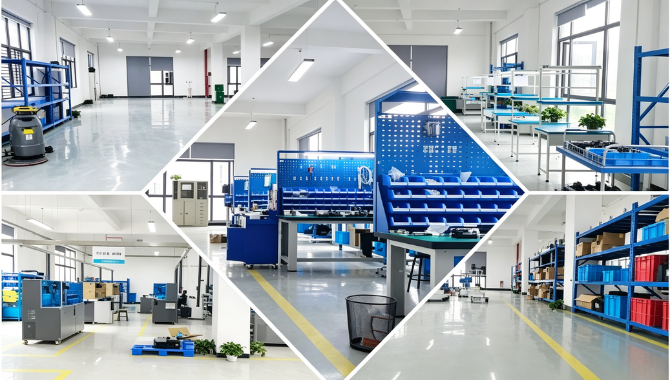
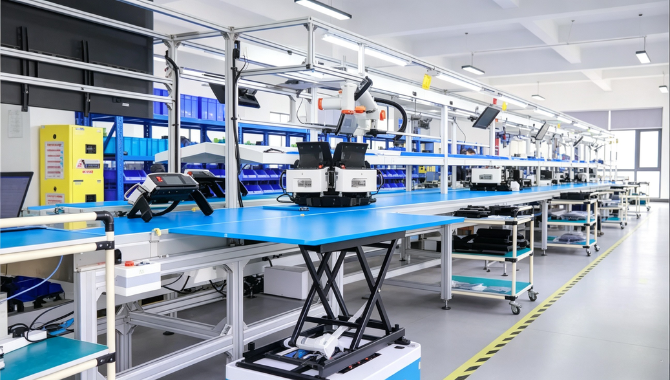
EZAN builds a complete industrial chain covering independent R&D, prototype verification, trial production and mass manufacturing of exoskeleton robots. Our production base supports large‑scale production of flexible and rigid lower‑limb exoskeleton series, targeting the goal of building the world‑class largest exoskeleton production base. Strict quality management runs through every procedure from component incoming inspection to finished‑product aging test.
Every wearable robotic unit undergoes multi‑round reliability, biomechanical safety and wear‑adaptation testing before delivery. We maintain close collaborative manufacturing ties with high‑quality upstream suppliers to guarantee stable component supply. Meanwhile, we reserve flexible production capacity to fulfill customized demands for medical institutional orders, consumer‑grade batches and overseas export projects. Our manufacturing system supports both small‑batch medical customized products and mass consumer‑product shipments, laying solid hardware foundation for domestic popularization and global market expansion.
Application Fields & Scenarios

EZAN medical‑grade exoskeletons offer full‑cycle gait training for stroke hemiplegia patients from bed‑ridden status to independent walking. It supports passive and active mixed training modes, correcting abnormal gait and rebuilding muscle memory. Cooperated with top rehabilitation hospitals, the device provides safe, repeatable robotic therapy, shortening rehabilitation cycles for neurological‑injury patients and improving their possibility of returning to daily life.

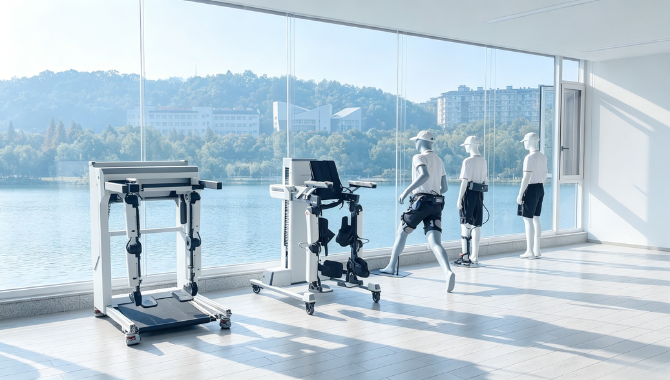
For patients living with spinal‑cord‑caused lower‑limb dyskinesia, EZAN rigid rehabilitation exoskeletons implement systematic standing, weight‑bearing and walking training. It helps relieve complications caused by long‑term bed‑rest, improve cardiopulmonary function and bone density. The robotic system gives real‑time feedback, assisting therapists to carry out standardized rehabilitation training inside rehabilitation centers.

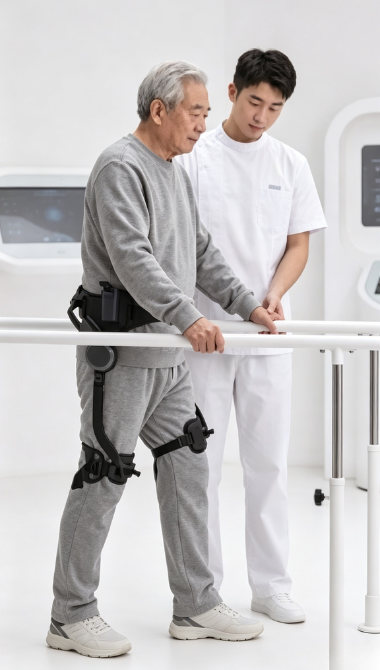
Aiming at senior groups with age‑related mobility decline, EZAN lightweight flexible exoskeleton delivers hip‑joint power assistance for daily walking, stair‑climbing and outdoor strolls. It effectively reduces lower‑limb joint burden and fall risk. This product is listed in national elderly‑product promotion catalog, supporting independent home and community mobility for elderly users.

EZAN consumer‑grade exoskeleton brings robotic assistance to outdoor enthusiasts. When hiking, trekking or long‑distance walking, it shares part of muscle load to mitigate leg fatigue. Lightweight wearable design fits outdoor activities, enabling users to travel longer distances with less physical consumption, expanding boundaries for hiking and recreational sports lovers.

For orthopedic postoperative patients suffering lower‑limb muscle atrophy and insufficient walking capacity, EZAN exoskeleton provides progressive assisted walking training. It adjusts assistive output dynamically according to individual recovery progress. It helps patients complete transition from bed‑rest to ground‑walking, accelerating functional recovery under clinical monitoring of rehabilitation specialists.

Working together with China Disabled Persons Welfare Foundation, EZAN carries out science‑driven walking‑assist public‑welfare projects. Our exoskeleton devices are delivered to disabled groups across regions. Beyond hardware supply, we provide operation guidance and follow‑up service, bringing accessible mobility possibilities for disadvantaged mobility‑impaired communities.
EZAN Patent & Intellectual Property Layout
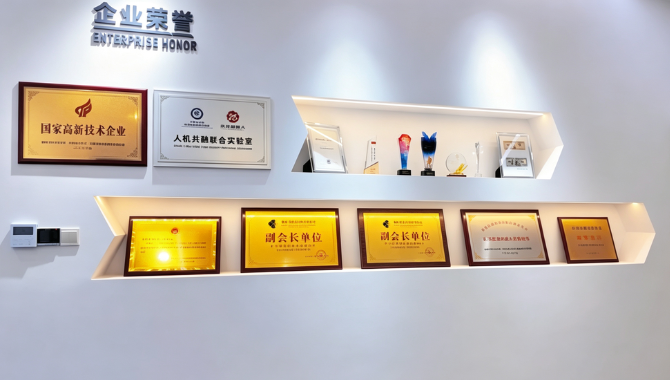
Intellectual property is the core moat for EZAN’s human‑robot co‑fusion technology. Up to now, EZAN has filed nearly one hundred patents, with 55 granted authorized patents and 5 computer software copyrights. The patent portfolio covers core technical fields: lower‑limb exoskeleton joint control, motion trajectory planning, energy recycling, self‑balance algorithm, quick‑release locking mechanism, wearable waist battery assembly and human‑machine perception sensors.
Our IP system protects both rigid medical rehabilitation exoskeletons and flexible cable‑driven exosuit products. Instead of scattered single‑point patents, we form systematic patent clusters around real‑world scenarios including bed transfer, wheelchair‑to‑stand transition, multi‑terrain walking. Many core invention patents solve long‑standing pain points such as delayed response and poor human‑body fitting of traditional exoskeletons, supporting our independent core technology without relying on foreign technical authorization.

Core Competitive Advantages of EZAN
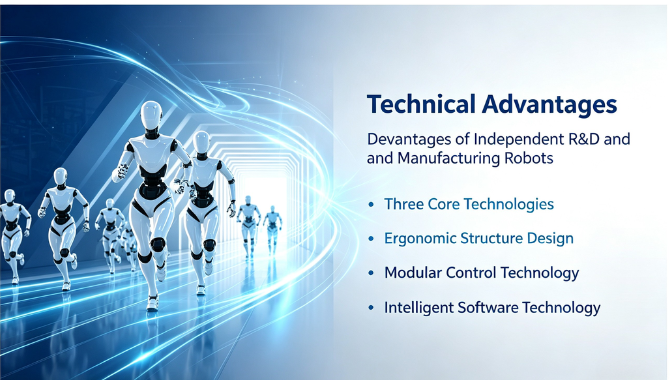
EZAN’s competitive advantages originate from deep integration of top‑tier academic research and commercialized product iteration. First, long‑term joint‑lab cooperation with SIAT‑CAS enables us to transfer lab‑level research results into market‑ready products efficiently. Second, our mixed‑perception AI kernel achieves sub‑second human‑motion intention prediction; POILC evolutionary algorithm makes devices self‑optimize along with user habits. Third, our flexible bionic structure adopts Bowden‑cable driving, delivering 50% maximum body‑load sharing while keeping lightweight and body‑friendly fitting. Fourth, we own full‑cycle product capability covering clinical rehabilitation, elderly daily mobility and outdoor consumer scenarios. Fifth, rich clinical validation with top‑tier hospitals verifies safety and curative effect. Finally, we have obtained multiple provincial and national science‑and‑technology awards, medical device certifications and special enterprise qualifications, forming comprehensive barriers in technology, clinical evidence, qualification and industrial chain.
EZAN Corporate Philosophy & Mission
EZAN follows the core philosophy “Gather talents with excellence, respect nature and care for people”. Our corporate mission is to deliver better human life through leading‑edge technologies. We believe robotics should not pursue cold mechanical performance alone; instead, technology should respect individual physical conditions and serve real human needs. Millions of patients suffering stroke sequelae, spinal cord injury and age‑related mobility decline long for independent walking and free movement. EZAN commits to breaking physical limits via human‑robot co‑fusion technology. Our vision is to grow into a world‑class human‑robot integration robotics enterprise. We hope our wearable robots become accessible mobility partners, helping users regain dignity, independence and more possibilities of life, rather than merely selling hardware devices. We keep exploring how machines and humans can cooperate harmoniously across diverse real‑life scenarios.
How Flexible Exoskeletons Reshape Stroke Rehabilitation Outcomes
Why Human‑Robot Co‑fusion Matters For Elderly Mobility

What Makes Soft Exosuit Different From Traditional Rigid Exoskeletons
It stands out with remarkable lightweight design, fitting closely to body contours and allowing full free joint movement. Rigid exoskeletons are largely limited to institutional rehabilitation training, but EZAN’s soft exosuit extends applications to home rehabilitation, elderly daily walking and outdoor activities, offsetting up to 50% of user’s physical load with no extra strain.
Certified as a Class-II medical device, it supports professional clinical rehabilitation instead of only serving as consumer equipment. With both soft and rigid technical routes, EZAN satisfies diverse needs covering clinical treatment and daily civilian use.
Key Certification Standards That Exoskeleton Robots Need To Pass

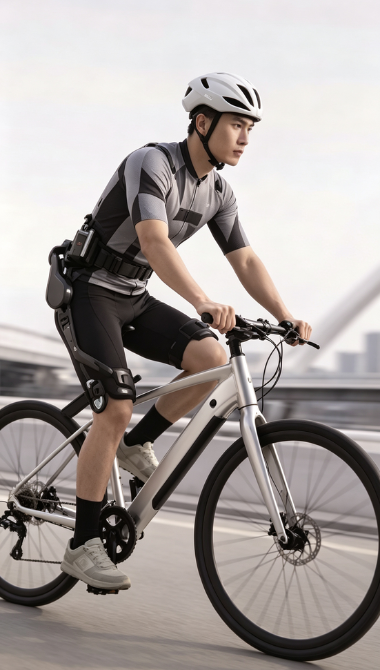
Consumer‑grade Exoskeletons Expand From Medical Rehabilitation To Outdoor Lifestyle
Global Market Outlook For Chinese‑made Human‑Robot Integration Exoskeletons
EZAN Company Development History

- EZAN kicked off its journey in 2020, finishing the first‑generation exoskeleton robot prototype.
- In 2021, the joint laboratory together with SIAT‑CAS was formally founded, laying foundation for human‑robot co‑fusion core research.
- In 2022, we completed flexible exoskeleton development and realized practical application for hemiplegia rehabilitation.
- The year 2023 brought multiple heavy‑weight honors including the First Prize of Guangdong Provincial Science and Technology Award and Shenzhen Science and Technology Award, as well as Second Prize from Chinese Rehabilitation Medicine Association.
- In 2024, we undertook Hunan Provincial Key R&D Program and launched the “Jishan‑EZAN” public‑welfare tech‑assist‑walking project with China Disabled Persons Welfare Foundation.
- In 2025, EZAN received tens‑of‑millions RMB strategic investment and was selected into national intelligent elderly‑care robot pilot project, as the only Hunan‑based enterprise for this program.
- By 2026, we obtained Hunan Specialized‑Refined‑Differentiated‑Innovative SME certification, and our flagship consumer product gained Hunan provincial AI terminal certification. We keep moving forward toward our long‑term global industrial layout.
More Features for Product

Our self‑developed Bowden‑cable driving system imitates biological muscle contraction mechanism. Different from bulky rigid linkage structures, flexible transmission fits human body curves naturally. It can share up to 50% body load without limiting natural joint rotation. Light‑weighted mechanical layout lowers long‑time‑wearing burden for end‑users. This bionic structure breaks overseas technical barriers for flexible exosuit and realizes good biomechanical compatibility for rehabilitation and consumer‑grade scenarios.

Equipped with POILC evolutionary iterative control algorithm, EZAN exoskeletons continuously optimize internal control parameters according to individual gait data collected during actual usage. The device will not be locked in fixed factory preset parameters. It gradually adapts to each user’s walking rhythm, step length and terrain habits. Together with multi‑modal sensor fusion, it avoids stiff mechanical counter‑action, greatly shortening user adaptation cycle whether for rehabilitation patients or ordinary consumer users.

Our perception system combines IMU inertial units, motion‑capture kinematics model and visual environment‑identification module. It recognizes stairs, slopes, barriers and uneven ground conditions in real‑time. Assistive power output will be dynamically adjusted responding to terrain changes. It is not merely responding to human body movement; the whole system understands surrounding environment conditions simultaneously. This capability makes our exoskeletons work reliably in hospital wards, home apartments, community roads and mountain hiking trails.

EZAN exoskeletons build multi‑layer safety‑protection mechanisms covering hardware mechanical‑limit, real‑time overload detection, one‑key emergency stop and abnormal‑motion interlock. Medical‑grade products pass Class‑II medical‑device registration assessment. Consumer‑oriented versions inherit part of medical‑level safety logics. Safety thresholds can be adjusted according to user groups: stroke rehabilitation patients, frail seniors and outdoor‑sport users. Multi‑layer protection effectively reduces fall risk during wearable‑robot operation.

 English
  Русский
  Español
  Français
  Português
  Tiếng Việt