


The Backbone of Modern Injection Shops
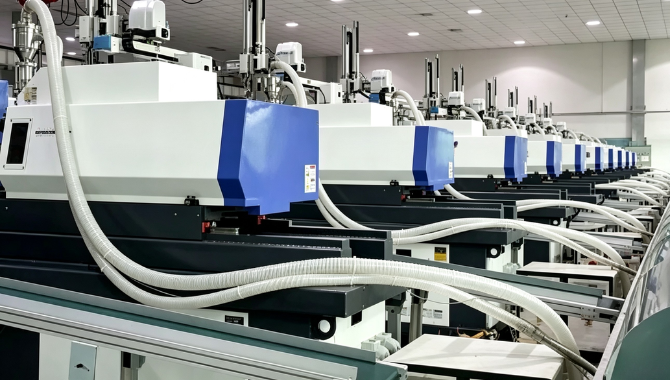
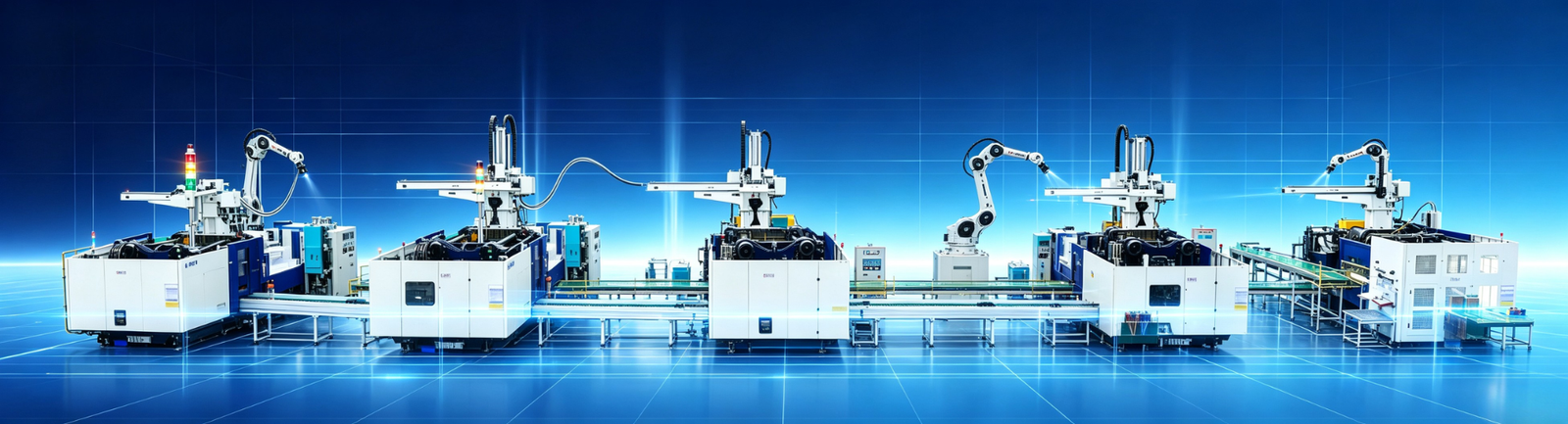
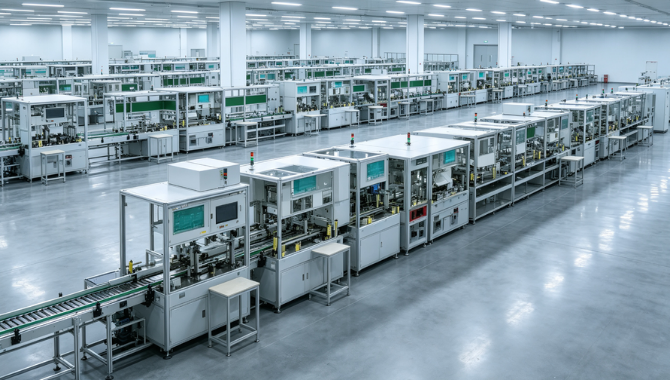
Behind every high-performing injection shop is a fleet of presses that run steady, shift after shift. HY automation cells are what make that possible. We pair proven six-axis or linear robots with custom end-of-arm tooling, integrate degating, conveyor and stacking into one compact cell, and connect the whole thing to your MES and AGV network. The result: consistent cycle times, lower handling scrap, fewer operators per press and a clear path toward lights-out night shifts. From single-cell upgrades to full-plant rollouts, HY designs, builds and commissions every system in Kunshan, then backs it with local service that actually answers. When your output depends on every press running, this is the automation you build on.
Gate Cutting: The Quiet Quality Battle on Every Press
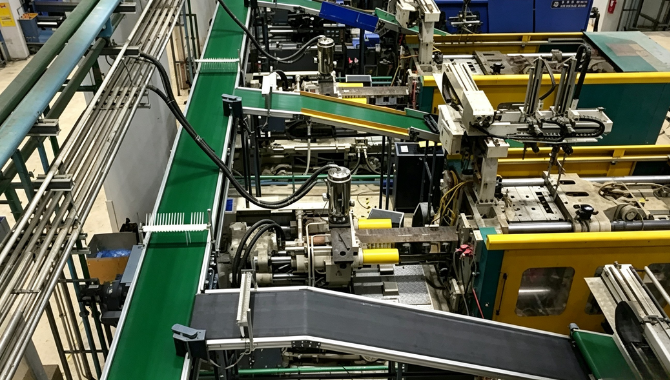
Nobody visits an injection plant to admire the gate cutters. But how you separate the part from the runner determines a lot about downstream quality. Snip it ragged and you have flash to trim, cosmetic rejects and sharp edges that hurt workers. Cut it too aggressively and you nick the part. HY offers four ways to handle gates — pneumatic nippers for standard jobs, mechanical cutters for thick runners, laser trimming for clean cosmetic edges, and ultrasonic degating for delicate resins. The right method depends on your material, your gate design and your surface requirements. Getting it right means fewer secondary operations, lower scrap and a cleaner part straight out of the cell. It’s the kind of detail that quietly makes or loses money, shift after shift.
Opções de personalização

Choose between six-axis articulated arms for complex part handling or overhead linear robots for fast, simple take-out. Mount above the press to save floor space or place a floor-mounted unit beside the machine for easier access and heavier payloads.

Pick mechanical grippers, flexible soft grippers or vacuum cups to match your part geometry and surface finish. Add automatic tool changers for multi-mold cells, or keep it simple with manual quick-change nests for lower-mix production.

Select pneumatic nippers, mechanical cutters, laser trimming or ultrasonic degating based on your resin type, gate geometry and cosmetic requirements. For hot-runner or gate-free molds, the degating station can be omitted entirely.

Unload into precision trays, bulk bins, bin-with-divider systems, or onto a conveyor feeding downstream assembly. The right presentation protects cosmetic surfaces, simplifies operator pickup and feeds the next process cleanly.

Add three-axis transfer units for orderly bin stacking, gantry robots for high-speed multi-bin handling, or keep manual unloading where volumes are low. Full cells can hand off finished bins directly to AGVs for warehouse transport.

Dock the cell directly to your AGV fleet for lights-out bin exchange, and connect production data — cycle count, OEE, reject rate — to your factory MES or ERP. Turn a standalone robot into a node on your smart factory network.
Why Six-Axis Robots Are Winning the Injection Floor
For years, linear take-out robots dominated injection molding — fast, simple, good for straight up-and-down moves. But as parts get more complex and factories want one robot to do more, six-axis articulated arms are showing up on more press lines. They can reach around the mold, flip parts mid-air, present them to degating and inspection stations, and stack them at odd angles. The same robot that pulls parts from the mold can also trim gates, place them on a conveyor and load them into a bin. HY’s six-axis cells take full advantage of that flexibility, with end-of-arm tooling designed around your specific part geometry. For molders running mixed parts or planning for future products, a six-axis cell isn’t just a robot — it’s an investment that stays useful long after the current molds retire.
The Real ROI Math on an Injection Automation Cell
Most buyers calculate robot ROI by dividing the machine price by one operator’s salary. That’s the wrong math. A good automation cell doesn’t just replace one person — it stabilizes cycle time, cuts scrap from mishandling, reduces secondary trimming labor, enables lights-out shifts and lets experienced workers move to setup and quality jobs instead of standing at a press all day. HY’s modular cells add up differently: consistent take-out means every cycle hits the same takt, clean degating removes a manual station, and bin stacking means one operator can tend multiple presses. When you add it all up — labor saved, scrap reduced, extra shifts run without extra hires — the payback usually looks much better than a simple headcount comparison. The real question isn’t whether you can afford a robot. It’s whether you can afford to keep pulling parts by hand.
When Your Parts Are All Different: The Case for Modular Cells
High-mix, low-volume injection shops have the hardest automation problem. A robot built for one part is wasted when the next mold goes in. That’s where modular cells earn their keep. HY’s seven-dimension configurator lets you mix and match robot type, end-effector, degating method, unloading style and stacking approach — and change elements as your product mix shifts. Quick-change end-of-arm tooling means a new mold can be running in minutes, not hours. A cell built for flexibility doesn’t just serve today’s production plan; it adapts to the orders you haven’t even quoted yet. For job shops and OEMs with broad product lines, modular is the automation strategy that doesn’t get obsolete when the catalog changes.
AGV Docking: When the Robot Cell Meets the Factory Floor
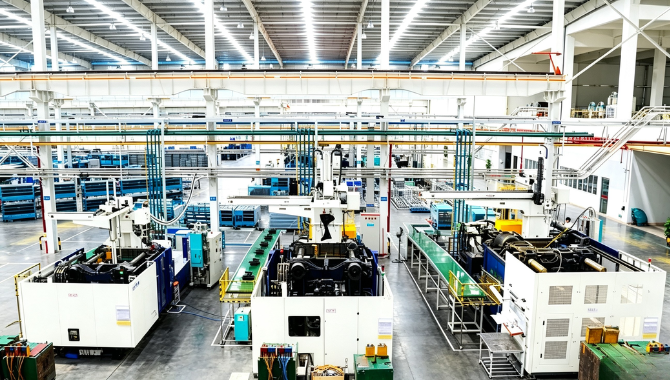
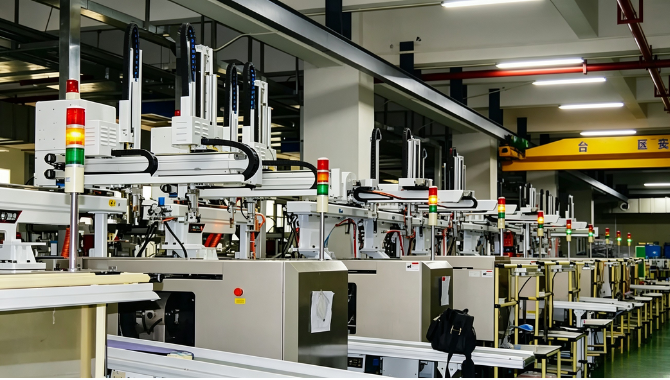
A take-out robot is great, but if a worker still has to drag full bins away from the press, you’ve only automated half the flow. AGV docking closes that loop. When a bin reaches its count, the cell signals the AGV, the cart picks up the full bin and drops off an empty one, and the press keeps running without a pause. HY cells with AGV integration turn standalone presses into nodes on a connected factory floor. Parts flow from mold to bin to warehouse automatically, production data flows to the MES, and the only human intervention is for setup and troubleshooting. For plants moving toward lights-out manufacturing, AGV-ready cells aren’t a nice-to-have — they’re the bridge between a single automated press and a fully automated line.
The Small Art of Taking Parts Out of a Mold
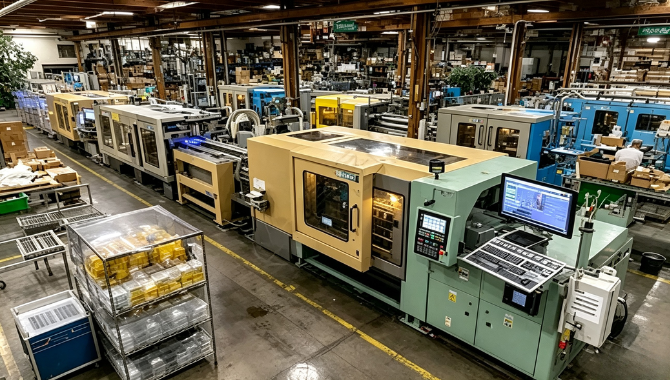
Taking a part out of a mold sounds like the easiest job in the factory. Reach in, grab, pull out. Anyone can do it — until you’ve seen a dropped part scratch a mold cavity, or a misaligned gripper bend an ejector pin, or a cycle delay that costs you ten seconds every shot, all shift, every day. Good take-out is precise, gentle and repeatable. The robot enters at exactly the right angle, the gripper closes at exactly the right force, the part clears the mold without touching, and it’s placed where it needs to go on the first try. HY cells are tuned for that level of consistency — not just to move parts, but to move them without adding problems to the process. It’s a small art, done right, that quietly pays for the whole cell.
Choose Us
HY doesn’t sell a standard robot package and call it a day. Our seven-dimension configurator builds the cell around your part, your press and your downstream process. Robot type, end-effector, degating method, unloading and stacking — all matched to what you actually make.
Every HY cell supports cycle logging, fault alarms and production data output. Connect it to your MES, dock it to your AGVs and scale toward fully unmanned shifts. The cell you buy today grows with your factory tomorrow.
Application Fields & Scenarios

Automotive injection parts — air vents, door trims, dashboard components — demand consistent take-out, clean degating and zero surface scratches. HY’s six-axis cells handle complex geometries with soft grippers or vacuum cups, trim gates cleanly and place parts gently into trays or dividers, protecting class-A surfaces from the moment they leave the mold through final packing.
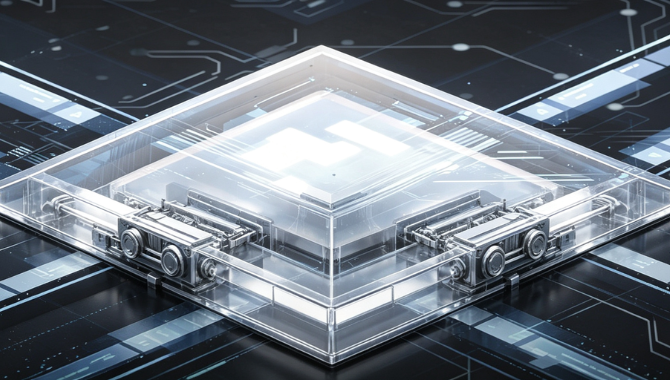
Phone frames, laptop housings and small appliance shells run on short cycles and tight cosmetic specs. Overhead linear robots pull parts fast, laser or ultrasonic degating leaves clean gate marks, and tray-based unloading preserves surface finish. For cleanroom or near-cleanroom molding, the fully enclosed cell keeps handling dust-free.

Medical components require traceable, contamination-free production with zero operator contact. HY’s automated cells handle parts from mold to sealed tray without human touch, integrate barcode marking and log every cycle. Full data capture supports ISO 13485 audits and batch traceability across the production run.

Thin-wall packaging — food containers, lids, disposable cups — runs on very fast cycles and high cavitation. Fast linear take-out robots synchronized with the press keep pace, conveyor systems move parts straight to downstream packing, and bulk-bin stacking maximizes throughput. For high-volume lines, gantry stacking and AGV handoff enable lights-out multi-shift operation.
Produtos relacionados
Alternative Names
injection molding automation line / injection molding robot cell / six-axis injection molding robot / take-out robot for injection molding / linear take-out robot / articulating arm injection robot / end of arm tooling injection molding / EOAT for injection press / gate cutting automation / degating robot injection molding / laser gate trimming / ultrasonic degating / pneumatic gate nipper / injection molding conveyor system / part removal conveyor / tray unloading injection molding / bin stacking injection molding / gantry robot stacking / three-axis transfer unit / AGV docking injection cell / MES integrated injection molding / smart injection molding factory / lights-out injection molding / unmanned injection molding cell / modular injection automation / configurable molding cell / domestic injection robot / China injection molding automation / Kunshan injection automation / custom injection robot cell / automotive injection molding automation / medical injection molding robot / optical lens take-out robot / thin wall packaging automation / consumer electronics injection robot / household appliance injection cell / press side automation / above press robot / floor mounted injection robot / quick change EOAT / automatic tool changer injection / vacuum cup end effector / soft gripper injection molding / mechanical gripper take-out / hot runner degating / runner removal robot / injection press tending robot / injection molding OEE improvement / injection molding scrap reduction / robotic demolding system
Enviar o seu pedido de informação agora
 Português
  English
  Русский
  Español
  Français
  Tiếng Việt