

Imaging Photometer Value

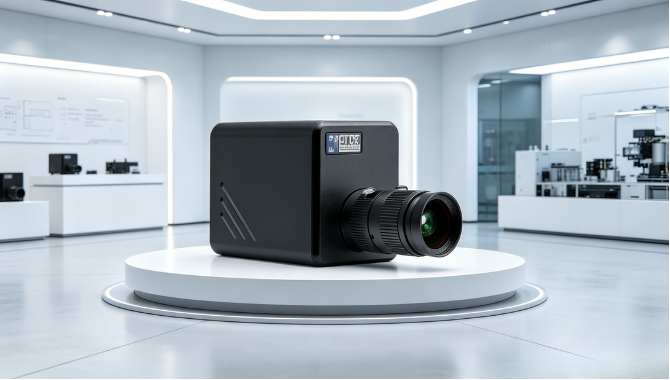
Same accuracy, faster speed, lower cost. HY imaging luminance meter uses proven CMOS sensor technology combined with precision brightness calibration algorithms, delivering reliable industrial-grade measurement performance at a fraction of the price of imported systems. With ±3% system accuracy and ±0.1% repeatability, it meets the quality control requirements of most manufacturing applications. Flexible lens and filter configurations adapt to display testing, automotive lighting, backlight inspection and more. Backed by expert local technical support and regular calibration services, it helps manufacturers upgrade their brightness quality control capability without overspending — a practical, cost-effective choice for production lines and R&D labs alike.

Future Trends in Imaging Photometry and What to Expect Next

Imaging photometry technology continues advancing rapidly, driven by sensor improvements, AI integration and growing demand from emerging display and automotive applications. Future imaging luminance meters will likely feature even higher native resolutions as sensor manufacturing progresses, enabling finer defect detection on increasingly dense Micro LED and micro-OLED displays where individual pixels must be measured. AI-powered defect classification will become standard, with machine learning models automatically identifying defect types and severity levels based on production training data, reducing reliance on expert human judgment. Cloud connectivity will allow fleets of luminance meters across multiple factories to share calibration benchmarks and performance data.

Improved low-noise sensor design will push minimum detectable brightness even lower, expanding capability for ultra-dark display testing. For manufacturers, staying competitive means partnering with suppliers who invest in ongoing R&D and can upgrade both hardware and software as requirements evolve. Choosing a forward-thinking supplier today ensures your optical measurement infrastructure remains capable and cost-effective as display and lighting technologies advance over the coming decade.

Ler mais

Opções de personalização

Practical Design
Lens Focal Length Selection
HY imaging luminance meters support multiple focal lengths including 16mm, 25mm and 50mm, covering applications from wide-area large surface inspection to long-distance small target measurement. The 16mm wide-angle lens suits one-shot testing of large displays and long light fixtures; the 50mm telephoto lens works for small luminous components at distance. Lenses are field-replaceable for flexible matching based on working distance, target size and FOV, with custom optical solutions available.
Visibility
ND Filter Extension
Optional ND8 neutral density filters extend maximum luminance from 50,000 cd/m² to 1,000,000 cd/m², supporting high-brightness scenarios like high-intensity LEDs, laser sources and HDR displays. Filters are precision-calibrated to maintain original system accuracy after attenuation. Available as built-in or external installation to match different brightness ranges and greatly expand equipment applicability across use cases.
Extensive Applications
Measurement Parameters & Algorithm Customization
Custom luminance analysis algorithms and measurement parameters are available, including custom ROI regions, multi-point mapping, uniformity calculation methods, gradient analysis and defect detection. Pass/fail thresholds and report formats can be customized per industry or enterprise standards. Dedicated analysis modules for specific targets like display Mura detection, luminaire spot analysis and backlight uniformity grading can be developed to match exact inspection needs.
Durability
Trigger & Communication Interface Customization
Standard GigE interface with GenICam protocol seamlessly integrates with mainstream machine vision software and automation systems. Custom hardware trigger interfaces and IO control signals can be developed per production line requirements for PLC, robot and test station synchronization. Multiple communication modes including TCP/IP and serial port support integration with MES, SPC and factory systems for automated data upload and quality traceability.

Product Overview

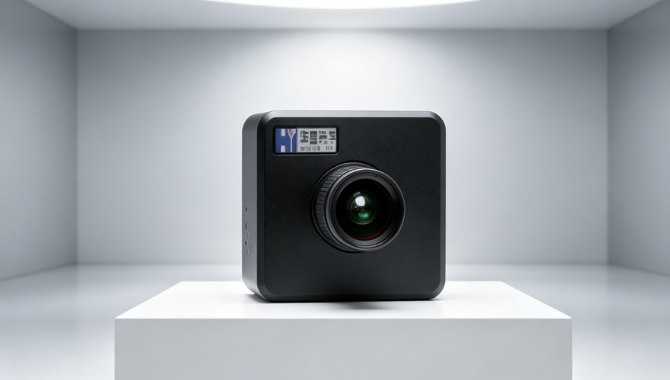
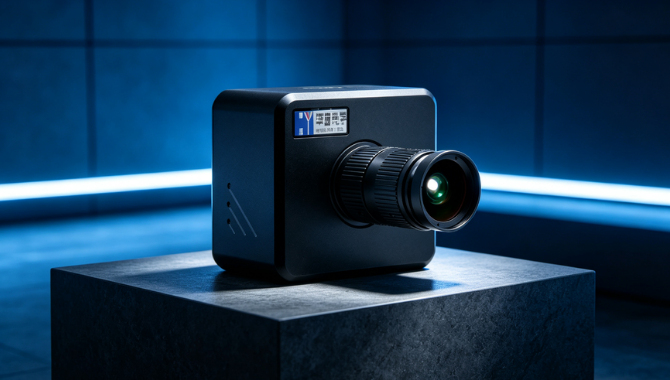
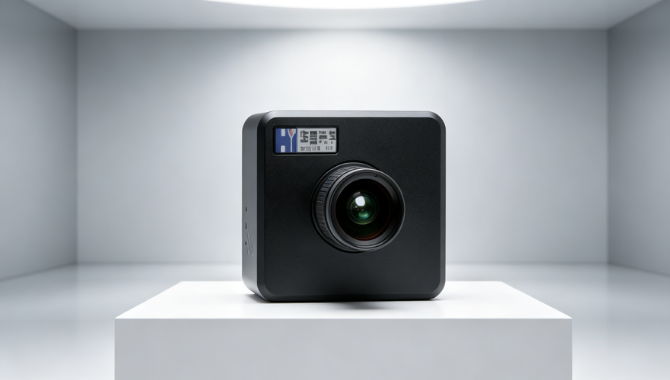
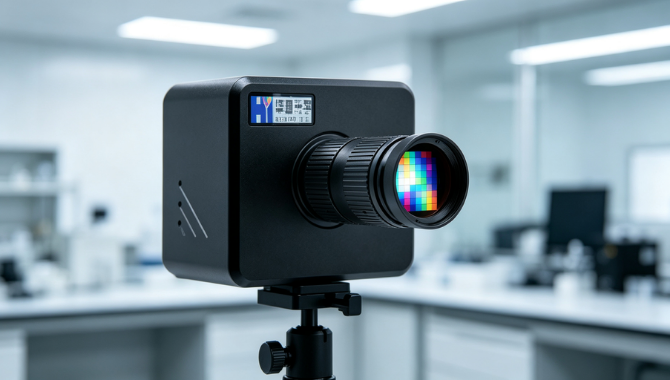
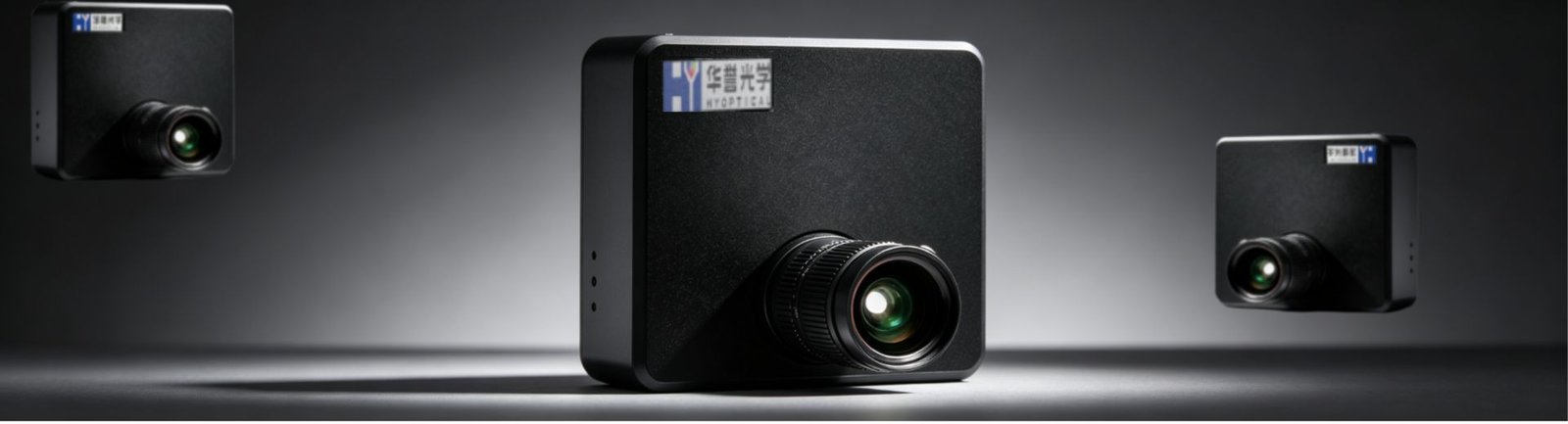
HY Imaging Luminance Meter leverages high-performance CMOS area array sensors with precision luminance calibration technology, capturing full-field 2D luminance distribution in a single shot. Equipped with a 20MP high-resolution sensor delivering over 1,000,000:1 HDR dynamic range, covering brightness measurements from 0.01 to 1,000,000 cd/m² with ND filter. Multiple focal length options including 16mm, 25mm and 50mm lenses, GigE interface and wide operating temperature from -30°C to 60°C. With ±3% accuracy and ±0.1% repeatability, it is widely used in display testing, automotive lighting, backlight inspection and LED luminaire evaluation — an efficient optical measurement solution for professional luminance uniformity testing.

Understanding Dynamic Range in Imaging Luminance Meters and Why It Matters

Dynamic range is one of the most important specifications when selecting an imaging luminance meter. It describes the ratio between the brightest and dimmest light levels a system can measure accurately in a single image. Modern displays and lighting products operate across enormous brightness ranges — think of an OLED screen showing both deep blacks and bright highlights simultaneously. A meter with insufficient dynamic range will either overexpose bright areas or underexpose dark areas, giving inaccurate readings. High-end systems like HY imaging luminance meters achieve HDR ratios exceeding 1,000,000:1 through multi-exposure HDR techniques, capturing detail across the full brightness spectrum in one composite measurement. This capability is especially critical for HDR displays, high-brightness LEDs and automotive lighting where both low-level dimming and full brightness must be verified. Choosing a meter with adequate dynamic range ensures accurate readings across all operating conditions of your product.

Key Factors for Selecting the Right Lens for Your Luminance Meter Setup
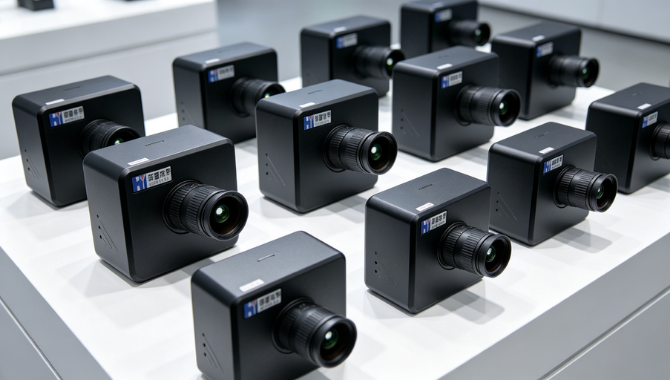
Selecting the proper lens for your imaging luminance meter is just as critical as choosing the meter itself. The right lens depends on three main factors: working distance, target size and required spatial resolution. Wide-angle lenses like 16mm capture large areas in one frame, making them ideal for big TV panels or long linear light fixtures tested at close range. Standard 25mm lenses work well for typical mid-size displays and moderate working distances. Longer focal lengths like 50mm magnify smaller targets such as individual LED dies or micro-display components, delivering higher spatial resolution at the cost of narrower field of view. Field-replaceable lenses give manufacturers flexibility to reconfigure the same meter for different products on the same production line. Always calculate field of view and spatial resolution during setup — correct lens selection ensures accurate, representative measurements across the entire target surface without wasted pixels.

Cost Benefits of CMOS Imaging Luminance Meters for Mid-Size Manufacturers

For mid-size manufacturers adding optical measurement capability, CMOS-based imaging luminance meters offer compelling cost advantages over traditional scanning photometer systems. The core CMOS sensor technology benefits from enormous economies of scale driven by the consumer camera and smartphone industries, dramatically reducing component costs compared to specialized scientific-grade detectors. This translates into purchase prices often significantly lower than legacy scanning systems, without sacrificing the accuracy needed for most production quality control applications. Beyond upfront cost, CMOS imaging systems have no moving mechanical parts, cutting maintenance requirements and extending service life considerably. For companies producing display modules, backlights or automotive lighting components at mid-range volumes, CMOS imaging luminance meters deliver professional-grade measurement performance at an accessible price point. This affordability enables smaller manufacturers to implement 100% optical inspection rather than relying on manual visual sampling, directly improving product quality and reducing downstream warranty and return costs.

Product Specifications & Parameters
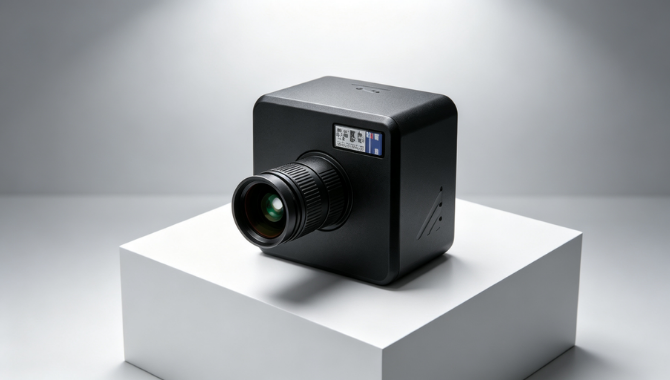
EspecificaçãoHY020Y 206m
Detector Model, Diagonal Size, Pixel SizeSony IMX183, 16mm, 2.4μm
Detector Type8bit / 10bit / 12bit CMOS
Pixel Array5472 × 3648
Dynamic Range65.5dB
High Dynamic Range (HDR)>1,000,000:1
Minimum Luminance (cd/m², SNR=41.5dB)0.01
Maximum Standard Luminance (cd/m²)50000
Maximum Luminance with ND Filter (cd/m²)1,000,000
System AccuracyLuminance(Y) ±3%
Short-Term RepeatabilityLuminance(Y) ±0.1%
Standard Lenses & Field of View (H×V)16mm: 31°×23°

25mm: 32°×24°

50mm: 16°×12°

Minimum Measuring Time (100cd/m² Native)Luminance: 3s
Spatial Measurement FunctionsLuminance, Uniformity, Customizable Parameters
Output Unitcd/㎡
Communication InterfaceGigE Ethernet
Power Consumption2.4W @12VDC
Dimension (H×W×D)90mm × 100mm × 137mm
Operating Temperature-30℃ ~ 60℃
Operating Humidity20% ~ 95% RH, non-condensing

HY owns core calibration algorithms for imaging luminance meters, with all flat-field correction, linearity correction and brightness calibration models developed in-house. Each unit undergoes multiple standard light source calibrations before shipment, ensuring accurate, traceable measurements. Our team continuously optimizes algorithms and quickly develops custom measurement functions for special needs.

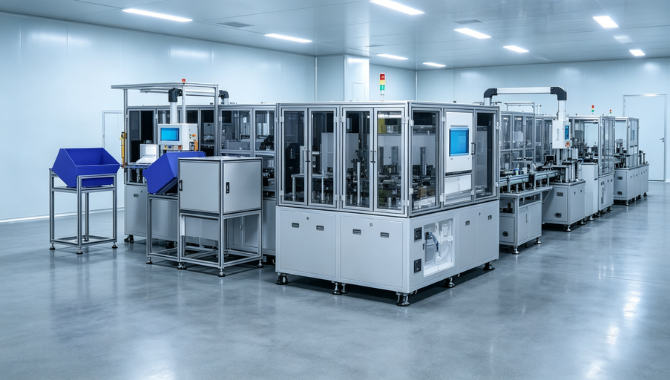
Every HY imaging luminance meter undergoes multiple calibration rounds and thermal cycling tests before shipment, ensuring factory accuracy and long-term stability. No moving parts, solid-state construction and -30°C to 60°C wide temperature operation handle factory floors, field sites and other demanding environments with reliable year-after-year performance.

Application Fields & Scenarios
Brightness uniformity of backlight modules and illuminated keyboards directly impacts end-product visual quality. HY imaging luminance meters perform comprehensive brightness inspection of BLU modules, laptop keyboards and mechanical keyboard backlights. Zonal measurement captures per-key or per-area brightness values, detecting common defects like corner dimming, light leakage and lamp shadows, with uniformity heatmaps supporting process optimization. Single-shot full-surface testing far outpaces traditional point-by-point measurement.
Image brightness and uniformity are core performance metrics for projection displays and automotive HUDs. HY imaging luminance meters support optical evaluation of these projection systems. The equipment measures key parameters like overall screen brightness, center-to-edge ratio, uniformity and contrast, assessing image quality across different projection distances and angles. Paired with dedicated fixtures in darkroom conditions, standardized measurements are achievable.
Electronic devices from smartphones and smartwatches to industrial control panels and medical displays have varying display brightness requirements. HY imaging luminance meters flexibly adapt to screens of all sizes and specifications. For small wearable displays, the high-resolution sensor delivers detailed brightness distribution measurement. For industrial and medical-grade displays, grayscale and brightness accuracy are calibrated to corresponding standards. Automated test sequences execute batch measurements with standardized reporting.
Get a Custom Quote
Not sure which configuration fits your application? HY engineers provide one-on-one selection guidance and quotations based on target size, accuracy requirements and use case. Deep industry experience helps you find the right luminance measurement solution fast.
  • “We needed an affordable HDR luminance meter for testing our new high-brightness LED products. The ND filter option from HY extends the range perfectly. Setup was straightforward. It handles everything from low backlight levels to peak brightness without swapping hardware.”
  • “HY customized the measurement software for our keyboard backlight line. They worked with us on the uniformity calculation method instead of forcing a standard solution. System has been running steady for six months now. Solid team to work with.”
  • “Compared to the imported brand we used previously, HY luminance meters cost noticeably less and deliver equivalent results for production QC. The 20MP sensor picks up subtle brightness variations on our panels. Great value for mid-volume manufacturers like us.”
  • “We installed HY imaging luminance meters on our display module line last year. Much faster than our old spot scanner, and the uniformity heatmaps help us catch Mura issues early. Accuracy lines up well with our reference lab equipment. Definitely worth the investment.”

Alternative Names

imaging luminance meter/imaging photometer/2D luminance measurement/brightness distribution meter/CMOS imaging photometer/display brightness tester/LED luminance uniformity tester/backlight BLU inspection equipment/automotive lighting luminance test/HDR imaging photometer/high resolution luminance camera/GigE vision photometer/cd/m2 measurement instrument/display mura detection system/luminance heatmap analyzer/production line brightness QC/industrial optical brightness meter/ND filter luminance extension/wide temperature photometer/pixel level brightness measurement/uniformity evaluation system/panel quality control equipment/ambient light brightness tester/mini led luminance inspection/OLED brightness measurement/smart watch display test/medical display luminance calibration/keyboard backlight uniformity/taillight brightness testing system/dashboard backlight meter/projection display luminance test/HUD brightness measurement/luminaire light distribution analyzer/consumer electronics display QC/imaging photometer manufacturer china/HY optical luminance device/portable imaging brightness meter/online luminance inspection/machine vision brightness measurement/factory calibrated photometer/luminance repeatability tester/optical quality control system/digital luminance camera/area array brightness meter/scientific grade luminance sensor/factory automation photometry/industrial brightness sensor/end of line luminance testing/uniformity grading system
Enviar o seu pedido de informação agora
pt_PTPortuguês
Deslocar para o topo